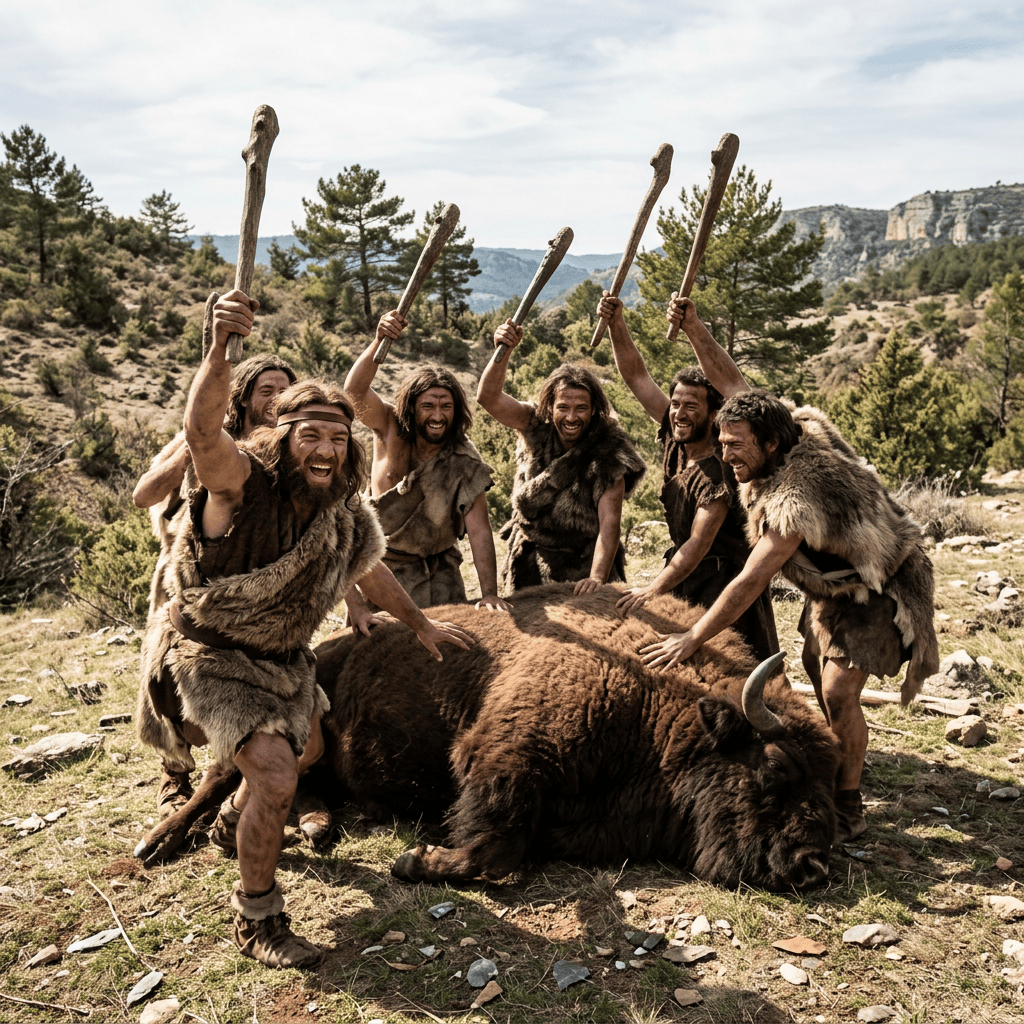
but in prehistoric times it was necessary.
Eating, eating a lot, eating too much.
Let’s go back to prehistoric times for a moment: if you go without food for a few weeks and one of the hunters finds a bison trail, then hope is on the horizon.
After an exhausting but successful hunt, the entire group pounces on the carcass. A period of cleaning, processing, and hanging the meat follows. But then the group is assured of a meal for the foreseeable future.
It is therefore logical that in those days a feast and/or a binge was held whenever a good catch occurred.
If there was little food for weeks and then suddenly a lot, it is logical that you want to consume it quickly. After all, you don’t know if you will still have food tomorrow.
That is why our brain goes looking for calorie-rich food. Clever, isn’t it?
But nowadays, with a supermarket on almost every corner, there is plenty to eat. Yet our brain doesn’t realize this, because we still want to keep stuffing ourselves. That happens unconsciously. That is why you find yourself standing in front of the cupboard with a piece of chocolate or a bag of chips.
This leads to us suffering from obesity. That primal urge that causes us to overeat nowadays is now primarily a burden.
And because we need to conserve our energy as much as possible for the next hunt, we just hang around. That, too, is ingrained in our primal brain. Energy conservation.
Even back then, we preferred being lazy to being tired. And not much has changed about that over time. We prefer taking the elevator to the stairs, the car to the bike. If you go to the gym regularly, people often look at you with respect. “How do you keep that up?”
Exercise lies outside our comfort zone. We would rather eat cookies and stay in bed. And we are also always looking for an excuse to keep eating. A birthday, a fun day out with girlfriends, a night out for dinner. There are no limits.
And you don’t even have to go to the gym for a little exercise. Start at home with small exercises that are easy to do. Are you wondering what you could do then?

